
Comprehensive Guide to
Crypto Payments
Secure Cryptocurrency Payment Gateway Solutions for Businesses

As digital currencies gain traction, understanding crypto payments becomes essential for businesses looking to modernize their payment systems. This guide delves into the mechanics of cryptocurrency payment gateways, exploring how they function and the benefits they offer. With the rise of blockchain technology, businesses can now accept various digital currencies, enhancing their payment options and reaching a broader customer base.
However, integrating these solutions requires careful consideration of security and compliance. This article will cover the fundamentals of crypto payments, the integration process, and the advantages and challenges associated with using Bitcoin and other cryptocurrencies in business transactions.
What Are Crypto Payments and How Do Cryptocurrency Payment Gateways Work?

Understanding Blockchain Payment Processing Technology
How Can Businesses Integrate Crypto Payment Solutions Securely and Efficiently?
Integrating crypto payment solutions involves several steps to ensure a smooth transition from traditional payment methods. Businesses must first choose a reliable payment processor that specializes in cryptocurrency transactions. This choice is crucial, as it impacts the security and efficiency of the payment system. Once a processor is selected, businesses need to set up merchant accounts and configure their payment gateways to accept digital currencies. Utilizing APIs provided by the payment processor can simplify this integration, allowing for seamless transactions.
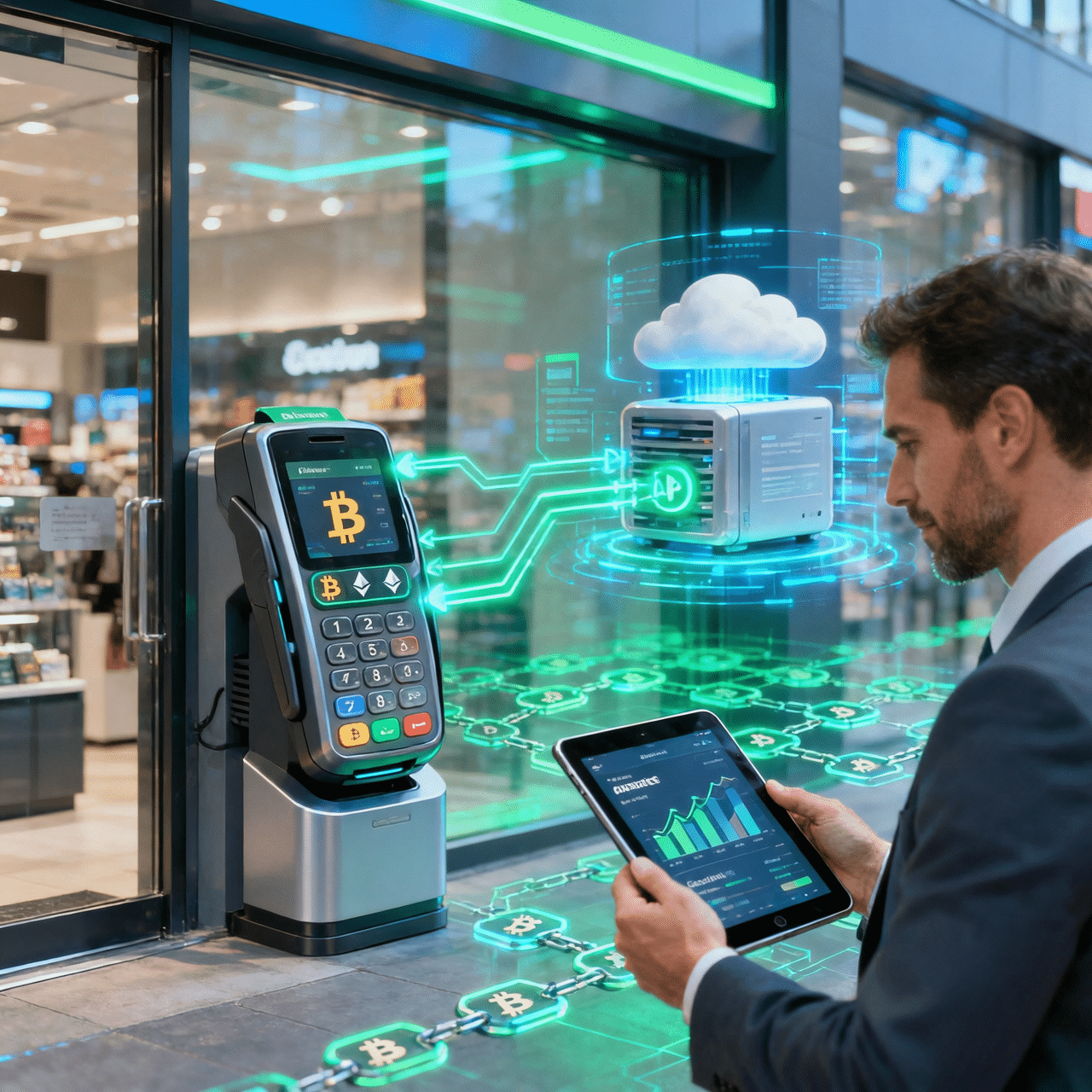
Integrating Crypto Payments: Security, Efficiency & Gateways
The integration of crypto payments offers significant technical advantages, including enhanced security, faster settlement times, lower transaction fees, and decentralized control over funds. This work discusses the technical aspects of crypto payment integration, such as crypto payment gateways, smart contracts, and wallet integration.
Additionally, it highlights the specific benefits for Data Exchanges, including seamless data discovery and purchase flows, secure transactions, and innovative business models like tokenized data access and decentralized governance. Addressing regulatory challenges, scalability, and user adoption are identified as crucial steps for realizing the full potential of crypto payments. Integrating crypto-based payment systems for data marketplaces: Enhancing efficiency, security, and user autonomy, 2024
Step-by-Step Guide to Crypto Merchant Services Integration

Choose a Payment Processor
Research and select a payment processor that supports various cryptocurrencies and offers robust security features.
Set Up Merchant Accounts
Create merchant accounts with the chosen payment processor to facilitate transactions.
Integrate Payment Gateway
Use APIs provided by the payment processor to integrate the payment gateway into your existing e-commerce platform.
Test Transactionsy
Conduct test transactions to ensure that the payment system functions correctly and securely.
Launch and Monitor
Once testing is complete, launch the payment system and monitor transactions for any issues.
Ensuring Compliance and Security in Crypto Payment Processing
Compliance with regulations is critical when integrating crypto payment solutions. Businesses must stay informed about the legal landscape surrounding cryptocurrency transactions, which can vary by jurisdiction.
Implementing robust security measures, such as two-factor authentication and encryption, is essential to protect sensitive customer data. Regular audits and updates to the payment system can help maintain compliance and security standards.
The evolving landscape of blockchain technology also brings significant legal and compliance challenges that businesses must actively address.
Blockchain Compliance & Legal Challenges for Businesses
However, compliance with AI and blockchain technologies requires significant time, effort, and money. The use of AI and blockchain technologies also demands users for sustainability.
This study introduces the legal challenges of financial technologies focusing on AI and blockchain systems for business and consumers. Considering transboundary transactions of blockchain and AI technologies and relevant risks, revision on AI or blockchain-relevant law should take both domestic and international measures into account.
Legal and Compliance Risks of AI and Blockchain Technologies, MA Kulular, 2025
What Are the Benefits and Challenges of Bitcoin Payment Solutions for High-Risk and International Businesses?
Advantages of Using Bitcoin and Stablecoins in Global Transactions
Reduced Regulatory Risk
Bitcoin operates outside traditional banking systems, reducing exposure to regulatory changes that can impact conventional payment methods.
Access to Global Markets
Accepting Bitcoin allows businesses to tap into a global customer base, as digital currencies are not bound by geographical limitations.
Faster Transactions
Bitcoin transactions can be processed within minutes, compared to traditional banking methods that may take days.

Navigating Compliance Challenges in High-Risk Industry Sectors
High-risk industries, such as gambling or adult entertainment, face unique challenges when adopting Bitcoin payment solutions. These businesses must navigate complex regulatory environments and ensure compliance with local laws. Establishing clear policies and working with legal experts can help mitigate these challenges and ensure a smooth integration of Bitcoin payment solutions.
Cryptocurrency Financial Risks & Management
The rapid emergence of cryptocurrencies has transformed global financial ecosystems, offering decentralized and innovative means of transaction and investment. However, this digital revolution has also introduced complex financial risks that challenge traditional risk management frameworks.
This study explores the evolving landscape of financial risk management in the age of cryptocurrency, aiming to identify major risk categories—such as market volatility, cyber threats, regulatory uncertainty, and systemic vulnerabilities—and assess the effectiveness of current mitigation strategies.
Financial Risk Management In The Age Of Cryptocurrency, 2025
| Feature | Description | Impact Level |
|---|---|---|
| Security Measures | Advanced encryption and fraud detection systems | High |
| Transaction Types | Support for multiple cryptocurrencies and fiat conversions | Medium |
| Integration Processes | Ease of integration with existing e-commerce platforms | High |
This comparison highlights the importance of selecting a payment gateway that aligns with a business’s specific needs and operational requirements.